
Add Row
Add Element
UPDATE
Add Element
  • Home
  • Home
  • Services
  • The Visibility Engine
  • Jump To Section
    • Client Attraction
    • Practice Growth
    • Local Visibility
    • Marketing Made Simple
    • Tools & Tech
    • Content That Converts
  • Contact
October 30.2025
2 Minutes Read

Master KPI Frameworks to Boost Wellness App Success

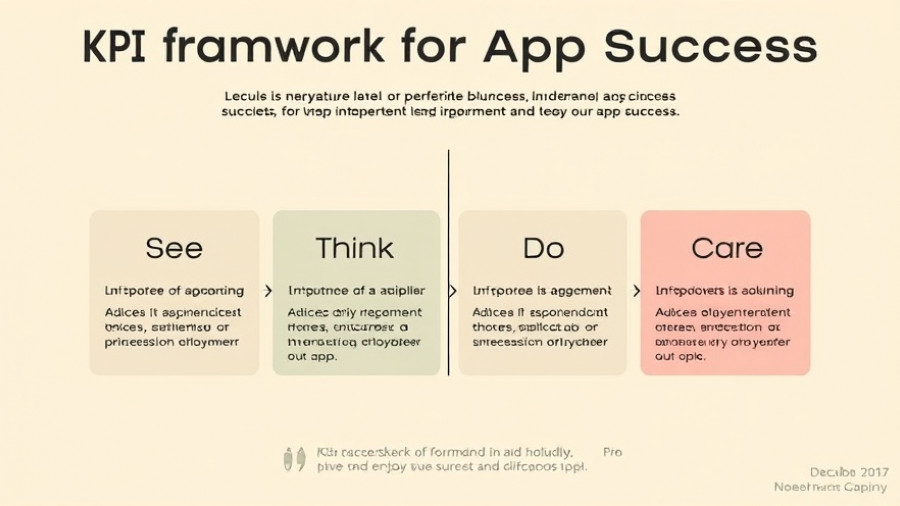
Infographic on KPI framework for app success, highlighting metrics and KPIs.

Unlocking App Success Through KPI Frameworks

Tracking the right Key Performance Indicators (KPIs) is essential for mobile app success. This approach not only provides insights into how well your app aligns with its strategic goals but also enhances user engagement and retention. For wellness practitioners seeking to grow their application reach and improve user retention, a structured KPI framework can truly be transformational.

What is a KPI Framework?

A KPI framework serves as a structured approach to organize and analyze the critical metrics that reflect an app’s performance. By focusing on essential KPIs like reach, activation, and retention, wellness practitioners can gain a comprehensive view of how their app performs, helping them identify areas for improvement and opportunities for growth.

Five Primary KPIs Every App Should Track

The KPI framework revolves around five primary (level 1) metrics:

  • Reach: Total app installs, indicating how effectively you are getting your app into users' hands.
  • Activation: The number of users who complete onboarding, reflecting initial user engagement.
  • Engagement: Daily Active Users (DAU), showing how frequently users are interacting with your app.
  • Retention: Churn rates that indicate how effectively your app retains users over time.
  • Business-specific KPIs: Metrics like Customer Lifetime Value (CLV) that align with your specific business objectives.

In your wellness app, focusing on these metrics can highlight which features engage users most effectively, helping to refine your offerings towards what users truly value.

The Step-by-Step Process to Implement a KPI Framework

To create a successful KPI framework, consider these four steps:

  1. Define Your App’s Core Purpose: Understand and articulate the value your app delivers to its users.
  2. Map the User Lifecycle: Identify key touchpoints where user engagement should be fostered to align with your business goal.
  3. Identify Essential KPIs: Choose metrics that will provide actionable insights without overwhelming you with data.
  4. Ensure Measurable Goals: Establish quantifiable targets associated with each KPI to assess progress.

Your Call to Action

For wellness practitioners looking to jumpstart app success, now is the time to develop your KPI framework. Utilize these insights to keep your app aligned with user needs and business objectives. Start measuring what matters!

Practice Growth

1 Views

0 Comments

Write A Comment

*
*
Related Posts All Posts

Unlocking Unique Offers to Scale Your Wellness Agency

Update The Future of Agency Growth for Wellness Practitioners In the realm of wellness, where the focus is often on personal connection and care, the integration of technology plays a pivotal role in expanding reach and enhancing client relationships. In the discussion with Jake Setterlun, the emphasis is on unique offers that help wellness practitioners not just survive, but thrive in an increasingly competitive market.In Jake Setterlun: Unique Offers to Scale Your Agency, the conversation delves into innovative strategies for growth in the wellness sector, sparking an exploration of actionable insights for practitioners seeking to enhance their practices. Unique Offers as a Game Changer Setterlun underscores the importance of creating distinctive offerings that resonate deeply with clients. These unique offers are not just about what services you provide but how they meet the specific needs and desires of your clients. For wellness practitioners, this could mean personalized wellness plans, virtual consultations, or membership models that foster community among clients. Leveraging Technology for Visibility and Growth As wellness practitioners look to scale their agencies, utilizing technology can significantly enhance visibility and client attraction. Online platforms and marketing tools have made it easier for practitioners to connect with potential clients well beyond their local geography. By adopting tech solutions like telehealth services and social media engagement strategies, practitioners can build a loyal client base and streamline their operations. Creating Impactful Client Relationships Setterlun's approach revolves around relationship-building, emphasizing the need to nurture client connections. In a wellness context, this means leveraging software tools that allow for follow-ups, feedback collection, and personalized messaging. Practitioners who invest in the technology that facilitates these connections often see higher client retention rates and increased referrals. In summary, Jake Setterlun's insights on scaling your agency present an exciting vision for wellness practitioners looking to innovate their practice. By creating unique offers and leveraging technology, practitioners can not just attract clients, but build lasting relationships, ensuring sustainable growth.

Why UX Optimization is Critical for Wellness Practitioners Looking to Improve Client Engagement

Update Understanding UX: The Gateway to Engaged Wellness ClientsUser Experience (UX) optimization is crucial not only for enhancing the aesthetic appeal of a website but for driving conversions, particularly for wellness practitioners aiming to attract and retain clients. A seamless UX can lead to higher trust and lower bounce rates, a particularly pressing concern given that 88% of online consumers are less likely to return to a site after a negative experience.Why UX Matters in WellnessFor wellness practitioners—be it yoga instructors, nutritionists, or alternative therapy providers—their online presence is often the first touchpoint potential clients have with their services. An intuitive and user-friendly website can significantly influence a visitor’s decision to engage with a practitioner. Effective UX mitigates confusion, allowing visitors to easily navigate information and services, which directly translates into better client retention and higher conversion rates.Key Practices for Optimal User ExperiencesHere are a few actionable UX optimization strategies that wellness practitioners can incorporate:Know Your Audience: Understand the specific needs of your clients. Are they looking for wellness tips, booking classes, or online consultations? Tailoring your content to meet their needs is vital.Simplified Navigation: Ensure that key information—like service offerings and contact details—is easy to find. A simple, cohesive layout not only engages visitors but encourages them to take action.Mobile-First Approach: With most clients browsing on mobile devices, it’s critical that your website is responsive and easily navigable across platforms. Long loading times can deter clients, diminishing engagement rates.The Link Between UX and SEOImportantly, Google’s algorithms assess user experience as a ranking factor. Sites with optimal UX—fast load times, mobile responsiveness, and easy navigation—improve their search visibility. For wellness practitioners, this means that as they invest in UX, they’re simultaneously enhancing their SEO performance, drawing more potential clients to their offerings.The Path Forward: Data-Driven Continuous ImprovementFinally, it is essential for wellness practitioners to recognize that UX optimization is not a one-time task. Continuous testing, gathering feedback from clients, and analyzing site data using tools such as heatmaps can provide valuable insights into areas needing improvement. Thus, practitioners should remain adaptable to the evolving preferences of their clients.In summary, the intersection of UX and wellness service delivery is pivotal for success. By investing in a user-friendly website tailored to client needs, wellness practitioners can enhance client engagement and ultimately improve practice outcomes.

Unlocking New Revenue: How High Ticket Consulting Can Transform Wellness Careers

Update High Ticket Consulting: Unlocking New Revenue for Wellness Practitioners In a world where the wellness industry is rapidly evolving, consulting provides a lucrative avenue for practitioners looking to scale their incomes without sacrificing valuable time. In her recent presentation titled 6 Figures from 10 Clients with HighLevel, Laura Meyer illustrates how wellness professionals can harness consulting to create significant revenue streams by leveraging technology like HighLevel.In the video 6 Figures from 10 Clients with HighLevel, Laura Meyer dives into the world of consulting for wellness practitioners, offering insights that are essential for those looking to expand their business. Understanding the Consulting Landscape Consulting in the wellness field is about more than just offering advice; it revolves around providing value and achieving measurable outcomes for clients. As Laura articulates, consulting is about “trading outcomes for income.” By focusing on results rather than just time spent, wellness practitioners can create tailored solutions that resonate with clients’ needs, bridging the gap between passion and profitability. Transforming Practices with Technology Laura’s journey began from managing a brick-and-mortar business to embracing high-ticket consulting with HighLevel software. This technology not only streamlines operations but empowers clients by offering them a framework to achieve their business objectives. The integration of HighLevel ensures that traits like automation and communication are optimized, allowing practitioners to focus on delivering value. The Importance of Relationships in Consulting One of the key takeaways from Laura’s insights is the pivotal role of relationships in consulting. Engaging with clients on a personal level establishes trust, making it easier for wellness practitioners to offer their services. By cultivating a network of referrals through genuine interactions, consultants can not only expand their clientele but also deepen their impact within the industry. Next Steps for Practitioners If you are a wellness practitioner interested in diving into consulting, the foundational step is to define your service offerings. Having a clear, outcome-based offer allows you to attract clients who are ready to invest in solutions. Laura suggests beta testing your consulting services with a few initial clients, generating case studies that can showcase your effectiveness and build credibility. To explore how to implement these strategies, consider integrating robust platforms like HighLevel to enhance your operational capabilities while you focus on scaling your consulting practice. In conclusion, consulting opens up remarkable opportunities for wellness practitioners. By leveraging technology, fostering relationships, and presenting clear offers, you can transcend traditional barriers to income and establish a fulfilling consulting practice that aligns with your values and expertise.

Terms of Service

Privacy Policy

Core Modal Title

Sorry, no results found

You Might Find These Articles Interesting

T
Please Check Your Email
We Will Be Following Up Shortly
*
*
*